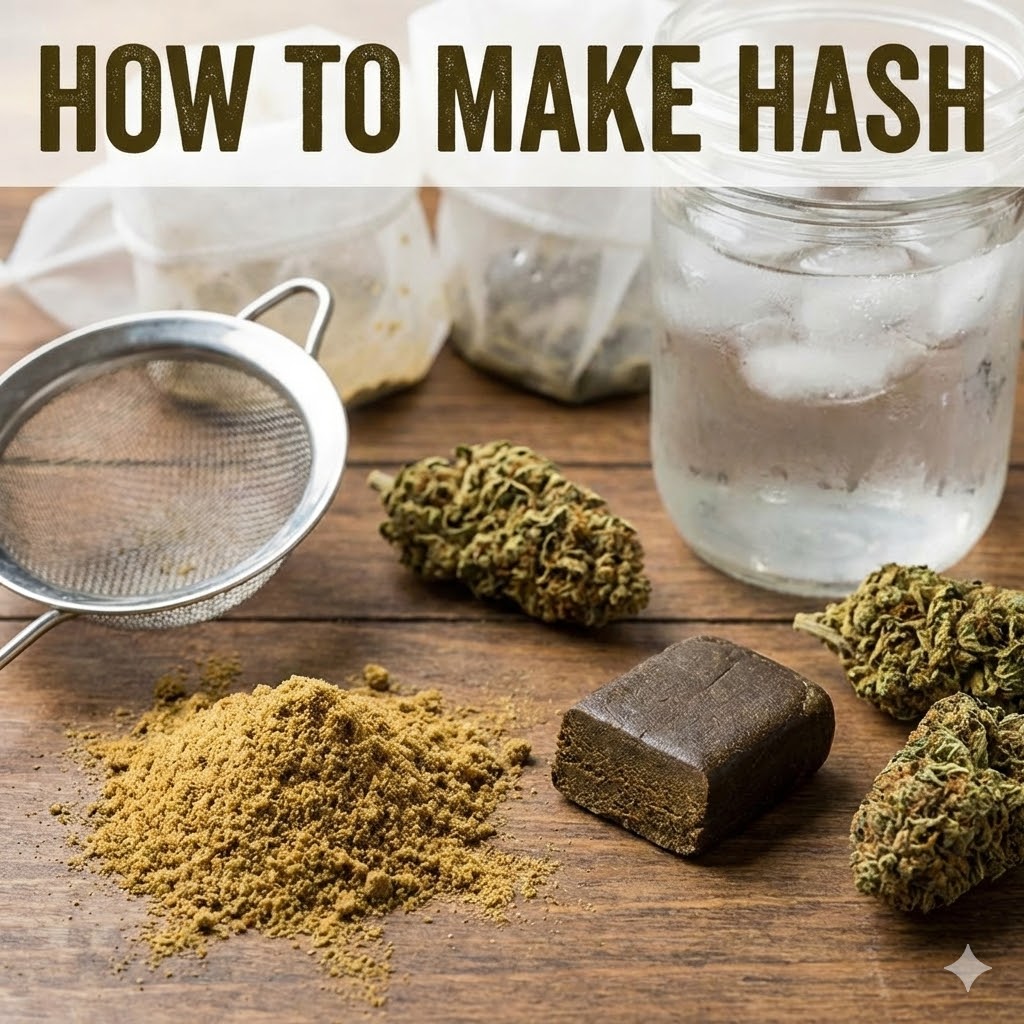
How To Make Hash: The Comprehensive Guide to Solventless Extraction
Hashish is more than just a cannabis product; it is a piece of living history. For thousands of years—long before the invention of butane torches or CO2 extraction labs—humans have been separating the potent resin from the cannabis plant to create hash. From the mountains of the Hindu Kush to the rif valleys of Morocco, the art of hash-making has been passed down through generations, revered for its purity, flavor, and complex effects
Today, we are witnessing a “Solventless Renaissance.” As legal markets mature, consumers are moving away from chemical extractions and returning to the roots of the plant. Learning how to make hash at home is the ultimate skill for the modern connoisseur. It allows you to transform excess trim or premium flower into a shelf-stable, high-potency concentrate without using a single chemical solvent.
In this in-depth guide, we will explore the science of trichomes, the international grading system for melt, and the step-by-step mechanics of the three most effective methods for DIY hash production.

The Science: Understanding What You Are Extracting
To make great hash, you must first understand the anatomy of the cannabis plant. You aren’t trying to extract the whole leaf; you are hunting for trichomes.
Trichomes are the microscopic, mushroom-shaped glands that coat the surface of high-quality cannabis flowers. They serve as the plant’s defense mechanism, producing bitter compounds and sticky resins to deter pests. Inside the head of the trichome (the capitate-stalked resin gland) lies the majority of the plant’s cannabinoids (THC, CBD) and terpenes.
When you make hash, your goal is mechanical separation. You want to snap these resin heads off their stalks and collect them in a mass, while leaving the inert green plant material (cellulose and chlorophyll) behind.
-
Contamination: If your hash is green, it means you have pulverized the plant material and mixed it with the resin.
-
Purity: If your hash is golden to dark brown, it indicates a high concentration of pure resin heads.
The 6-Star Grading System
In the world of modern solventless hash, quality is measured on a “Star” system. Understanding this will help you set realistic goals for your home extraction.
-
1–2 Star (Cooking Grade): High amount of plant material. Does not melt. ideal for edibles.
-
3–4 Star (Half Melt): Good quality. Bubbles when heated but leaves a residue. Great for topping bowls.
-
5–6 Star (Full Melt): The holy grail. Pure resin heads with zero contaminants. It melts into a puddle like oil when heated. This is difficult to achieve without professional equipment, but it is the goal.
Method 1: The Dry Sift Technique (Traditional)
Dry sifting is the oldest and most straightforward method of making hash. It mimics the traditional techniques used in Morocco and Lebanon. It relies on friction and gravity to separate the trichomes.
Best For: Beginners and those who want to preserve the maximum amount of flavor (terpenes are water-soluble to some degree, so dry sifting preserves the true nose of the plant).
Essential Tools
-
Sifting Screens: A set of screens with varying micron sizes (usually a box set).
-
Collection Surface: A smooth, clean surface like a mirror or a sheet of glass.
-
Card: A static-free scraper (plastic ID cards work well).
-
Material: Frozen trim or buds (The colder, the better).
Step-by-Step Guide
1. The Deep Freeze Temperature is the most critical variable in dry sifting. At room temperature, resin is sticky and gummy. At freezing temperatures, it becomes brittle and glass-like. Place your cannabis material in a freezer for at least 24 hours before starting.
2. Agitation Place your frozen cannabis on the top screen (the widest mesh). Gently slide the material back and forth. The goal is to tumble the buds, allowing the trichomes to snap off and fall through the mesh.
-
Pro Tip: resist the urge to grind or mash the material into the screen. While this increases yield, it forces green contaminants through, lowering the quality. A gentle “carding” motion is best.
3. Filtration Gravity will pull the glands through the screens. If you are using a multi-screen box, you will find different grades of kief on each level. The finest screen (often 70–90 microns) will hold the highest quality heads.
4. Static Tech (Advanced Cleaning) Professional hash makers often use “Static Tech” to clean their dry sift. By wrapping a DVD case in parchment paper and creating a static charge, you can sweep it over your pile of kief. The static electricity picks up the lighter plant contaminants, leaving the heavy resin heads behind.
Method 2: Ice Water Extraction (Bubble Hash)
If you want to achieve “Full Melt” quality at home, Ice Water Extraction (Bubble Hash) is the gold standard. This method uses water as a carrier and ice to freeze the trichomes. Because resin is oil-based, it does not dissolve in water; it simply sinks, while the leafy material floats.
Best For: Purity, potency, and smooth smoke.
Essential Tools
-
Bubble Bags: A 5-bag or 8-bag filtration kit (25 micron to 220 micron).
-
Vessel: A 5-gallon bucket (or a specialized washing machine).
-
Ice & Water: Use purified or RO water if possible to avoid chlorine.
-
Sprayer: A hand-pump garden sprayer with clean water.
-
Drying Screen: A 25-micron sheet for wicking moisture.
Step-by-Step Guide
1. The Setup Line your bucket with your bags. Place them inside one another, starting with the finest mesh (25u) and ending with the coarsest (220u). The 220u bag is your “work bag” where the ice and weed go.
2. The Soak Fill the bucket with ice and water. Add your cannabis (fresh frozen or dried). Let it sit for 15–20 minutes. This rehydration period allows the water to permeate the buds, making the trichomes brittle without breaking up the leaf matter.
3. The Wash Agitate the mixture. You can use a wooden paddle or a specialized mini-washing machine.
-
The Vortex: You want to create a current that knocks the trichomes off the plant. Do not shred the weed. A gentle, consistent stir for 10–15 minutes is sufficient for the first wash.
4. The Pull Remove the work bag (220u) containing the wet plant matter. Squeeze it out and set it aside (you can wash it again later). Now, pull the remaining bags one by one.
-
190u–160u: Often contains contaminants. Good for cooking.
-
90u–73u: The sweet spot. This is usually your highest grade, golden melt.
-
45u–25u: Lower grade, often called “mid-grade.”
5. Drying (Crucial Step) Moisture is the enemy of hash. If you do not dry it properly, it will mold.
-
Microplaning: Take your wet patties of hash and freeze them solid. Once frozen, use a microplane (zester) to grate the hash into a fine, sandy powder onto a piece of cardboard lined with parchment. This maximizes surface area.
-
Let it dry in a cool, dark room (60°F/15°C) with low humidity (35%) for 5–10 days.
Method 3: The Dry Ice Method (High Yield)
Dry ice (solid CO2) is significantly colder than regular ice (-78.5°C). When mixed with cannabis, it freezes the trichomes instantly, causing them to shatter off the plant in massive quantities.
Best For: Speed and massive yields. Perfect for processing large amounts of trim quickly.

Step-by-Step Guide
-
Put your cannabis and dry ice pellets into a bucket.
-
Place a 73u or 90u bubble bag over the top of the bucket.
-
Turn the bucket upside down over a large, flat table.
-
Shake vigorously. You will see a “snowstorm” of resin falling through the bag.
-
Warning: Dry ice tends to break up plant matter very quickly. The hash produced is usually lower quality than bubble hash but excellent for topping joints or making edibles.
Post-Processing: Pressing and Curing
Once you have your loose resin (kief or bubble hash), you can consume it as is, but to make true hashish, you need to press it. Pressing ruptures the membrane of the trichome heads, releasing the oils and oxidising the product. This changes the flavor profile from “fresh plant” to “earthy, spicy hash.”
The Frenchy Cannoli “Hot Bottle” Method
This technique honors the late master hashishin Frenchy Cannoli.
-
Pack: Place your high-quality dried resin between two sheets of turkey bag plastic or parchment.
-
Heat: Fill a glass wine bottle with boiling water.
-
Press: Use the bottle as a rolling pin. Apply heavy pressure and roll it slowly over the resin. The heat will melt the heads, turning the powder into a dark, sticky taffy.
-
Fold and Repeat: Fold the taffy over and roll it again. Repeat this process until the hash is uniform, shiny, and highly aromatic.
-
Temple Ball: Roll the warm hash into a sphere. This shape limits surface area exposure to air, allowing the inside to age and cure for months or even years.
Conclusion
Making hash is an art form that rewards patience. It teaches you to respect the plant and pay attention to the details of temperature, humidity, and cleanliness. Whether you choose the purity of the ice water wash or the simplicity of the dry sift, the result is the same: a clean, potent expression of cannabis that connects you to an ancient tradition.
Remember, the best hash isn’t found on a shelf; it’s made in the kitchen with care, quality starting material, and a love for the process.